Culture and the Common Life
Culture and the Common Life
Good League Hence did not begin simply with the question of what we might make or sell. It grew out of a longer engagement with questions about how people live together: how communities endure, how traditions are transmitted, what gives dignity and meaning to work, and what allows a genuine culture to take root.
Books Were an Important Part of That Beginning
Works such as Rod Dreher’s The Benedict Option, Josef Pieper’s Leisure: The Basis of Culture, and many of the books collected in our Literature section approached modern life from very different directions.
Some considered the family economy and the dignity of productive work. Others examined property, agriculture, education, craftsmanship, decentralization, leisure, cultural inheritance, and the institutions that once bound people more closely to one another.
Yet across those different subjects, a common problem began to emerge.
Modern life has given us extraordinary mobility, convenience, and productive power, while often weakening the smaller associations in which people have traditionally found belonging and purpose.
Work may be separated from household and community. Commerce can become distant and anonymous. Entertainment replaces participation. People may live surrounded by others while knowing remarkably few of them. Skills, songs, customs, celebrations, and forms of local knowledge that once passed naturally between generations can disappear within a remarkably short time.
The Village
Again and again, our reading brought us back to the importance of the village.
By village, we do not simply mean a picturesque settlement or an attempt to recreate some idealized past.
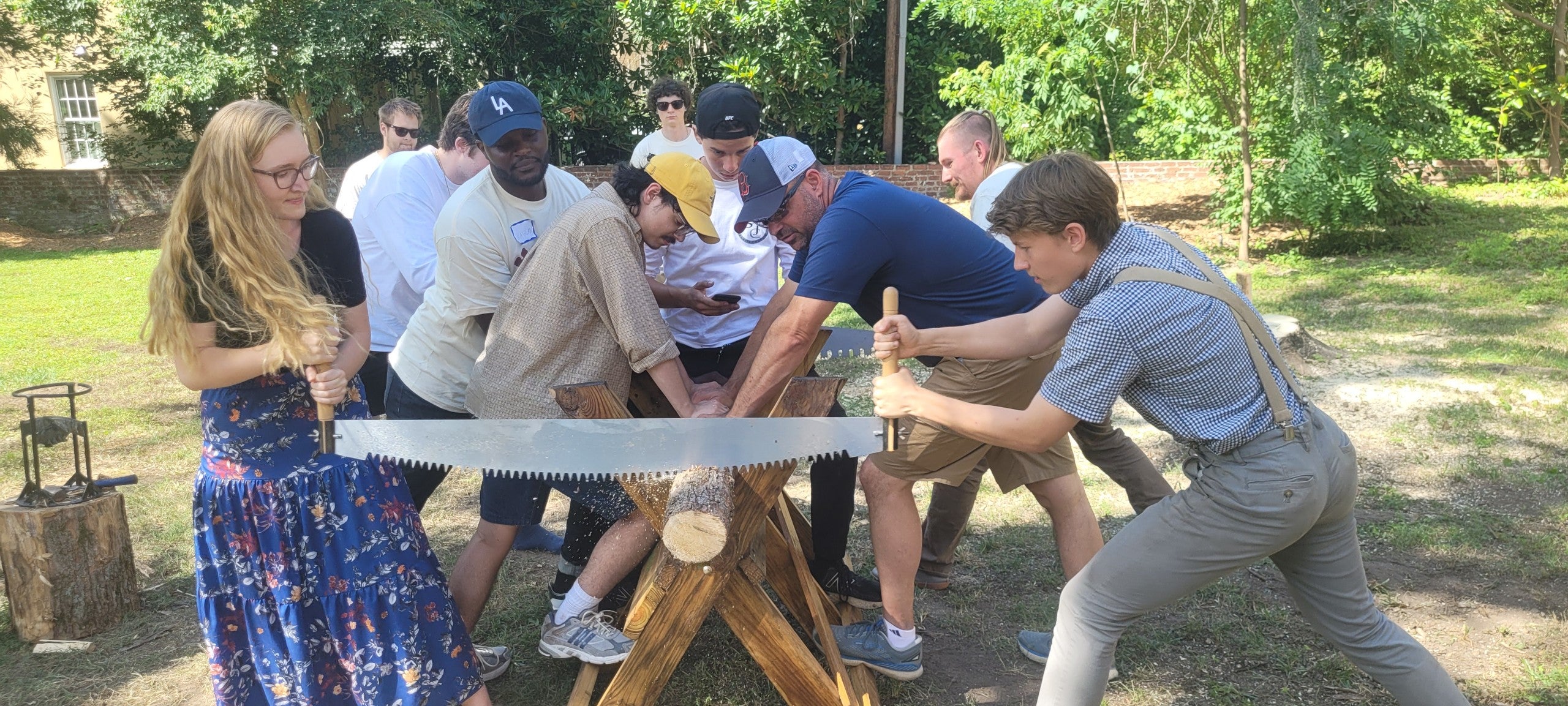
We mean something closer to a human scale of life: a place in which economic, social, and cultural relationships can overlap; where people are sufficiently near to one another to work, exchange, celebrate, teach, make, and build things together.
The village became useful to us not as a perfect solution to modern life, but as a way of thinking about many of its fractures at once.
Loneliness looks different where people are known and needed. Labor looks different when its purpose and its beneficiaries are visible. Commerce looks different when buyer and seller may also be neighbors.
Music, dance, festival, craftsmanship, and tradition likewise look different when they are things a community practices, rather than things an audience merely consumes.
From Ideas to Practice
Those ideas gradually became practical questions.
If stronger local economies, meaningful work, useful skills, shared traditions, and a richer common life are worth cultivating, then they cannot remain abstractions.
They must find expression in ordinary life—in what people make, use, teach, grow, repair, exchange, celebrate, and pass on.
The commercial work of Good League Hence emerged from that conviction.
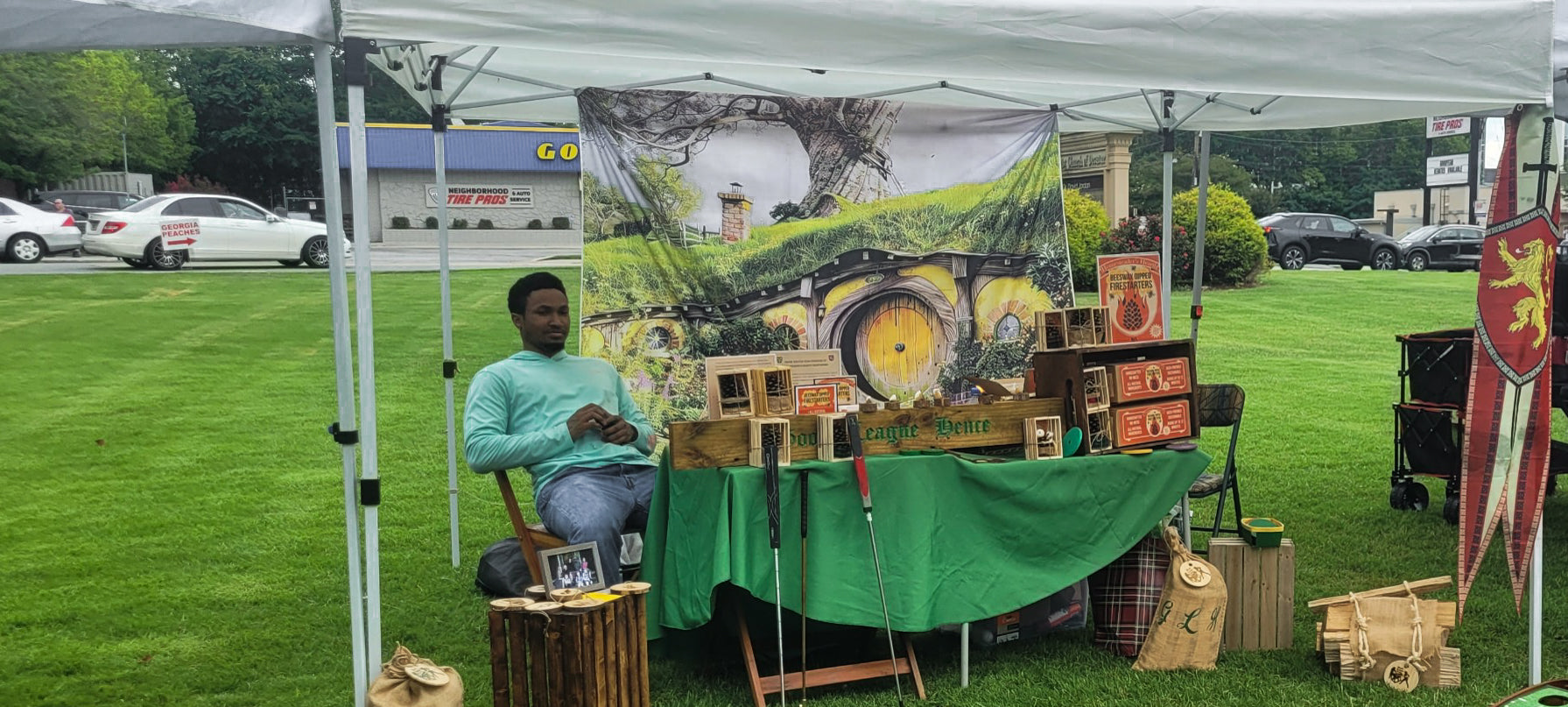
The goods we produce are one practical expression of a much broader inquiry into household economy, craftsmanship, self-reliance, local exchange, and the recovery of useful practices.
We are interested in making things that can stand on their own as worthwhile goods, while also participating, however modestly, in a different way of thinking about production and exchange.
Culture Is More Than Material
A common life also requires imagination, memory, beauty, recreation, celebration, and inheritance.
The books people read, the songs they sing, the dances they learn, the festivals they hold, and the customs they preserve all help determine what kind of community they inhabit.
That is the purpose of this section.
Literature
Books and ideas that have shaped Good League Hence, challenged our assumptions, and helped us think more seriously about work, community, culture, economy, and the common life.
Music
Songs and musical traditions that belong not only on a stage or through a pair of headphones, but among people—sung, played, remembered, and shared.
Dance
Traditional and communal dances that demonstrate one of the oldest ways people have celebrated, socialized, courted, remembered, and simply enjoyed being together.
Festival & Culture
Feasts, festivals, processions, customs, games, crafts, agriculture, and other practices through which communities give shape to the passing of time and to life together.
These pages gather some of the works and traditions that have shaped Good League Hence, influenced our understanding of the village and the common life, or simply struck us as worthy of being known and practiced.
Some bear directly upon the work we do. Others reach considerably further afield.
They are included because Good League Hence itself arose, in part, from encountering such things and asking a simple but consequential question:
What would it look like to take them seriously in practice?